For decades, Texans have considered Lone Star as one beer with one story. A new book from San Antonio author Jeremy Banas argues we've all been getting it wrong — two separate breweries shared the name, and the first one never brewed a drop of Lone Star at all.
"There's really two histories, not one, and that's the misconception," Banas said.
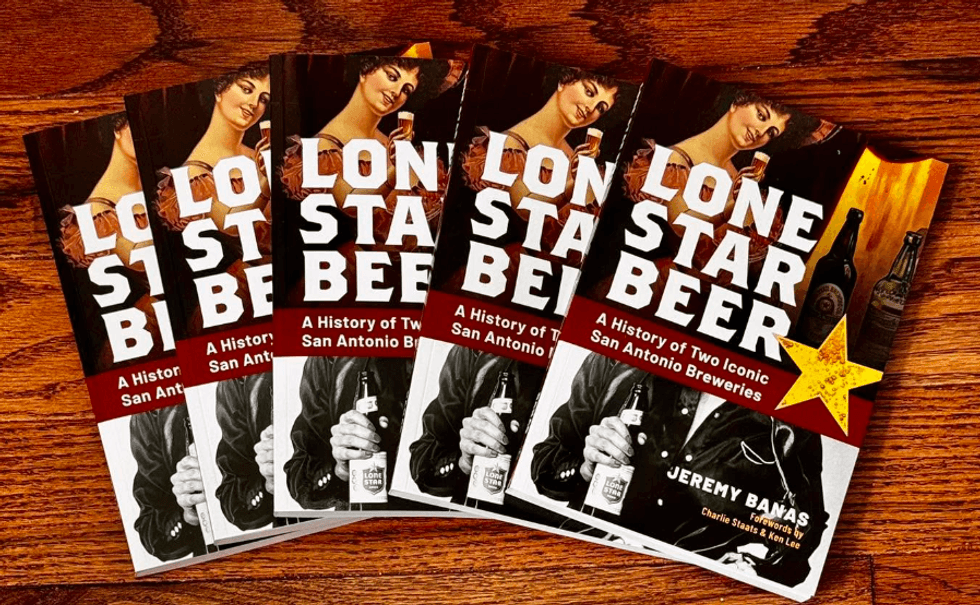
His "Lone Star Beer: A History of Two Iconic San Antonio Breweries," arriving on July 21, untaps a complicated story that is as much about how suds shaped Alamo City's past as it is about the "National Beer of Texas."
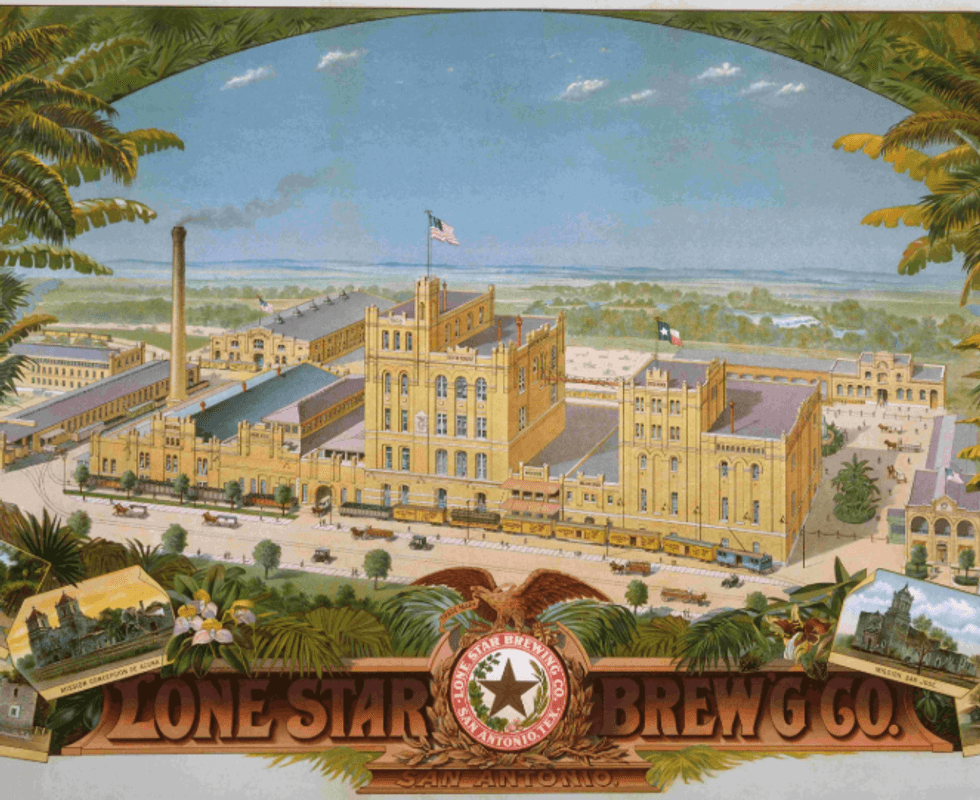
The first Lone Star Brewing Co. opened in 1884, backed by local businessmen — John Henry Kampmann and Edward Hoppe — and St. Louis beer magnate Adolphus Busch. The operation, housed in what's now the San Antonio Museum of Art, never put Lone Star on the label. Its flagship was Alamo Beer, an unrelated predecessor to today's Alamo Beer Co., before Prohibition shut the operation down.
The Lone Star beer that Texans actually drink came in 1933, when Sabinas Brewing Co. built a brewery at 600 Lone Star Blvd. The product cycled through several names and owners through 1940, when it borrowed the address' moniker. The brand endures under the Pabst Brewing umbrella, and the former 600 Lone Star Blvd. site is being eyed for redevelopment.
Two breweries, two centuries, and a city that has a habit of reusing names. Undoing all the lore didn’t come easy, even though the author had previously written histories of Pearl and an overview of San Antonio’s beer industry with Travis Poling. Banas said the whole process took more than two years.
"It was an easy story and not an easy story to clarify, so that made things a little more interesting this time around. It was a little more challenging to write," he said.
Part of the difficulty was that the research kept turning up so many unrelated — if juicy — threads. Even Pancho Villa fits into the story. During the Mexican Revolution, Villa's men kidnapped Karl "Kelly" Haegelin, who owned the Mexico-based brewing company that became Lone Star.
And the marketing made an impact on how Texas mythologizes itself. Banas spent hours digging through the Wittliff Collections, the Texas State University archive of regional cultural history. There, he found a trove of artifacts donated by Jerry Retzloff, Lone Star's former marketing and promotions manager and a key figure in the brand's rise in the ‘70s and ‘80s.
"There were other images of Lone Star Beer portrayed through advertising before that, but the only image we have of it now – Willie Nelson, cowboys, armadillos, music – was created in the '70s, and it was brilliant," Banas said.
Although much of the brewery’s history has been forgotten, some of it still lives in memory. Ken Lee, Lone Star's final brewmaster in San Antonio, wrote a foreword that frames the book.
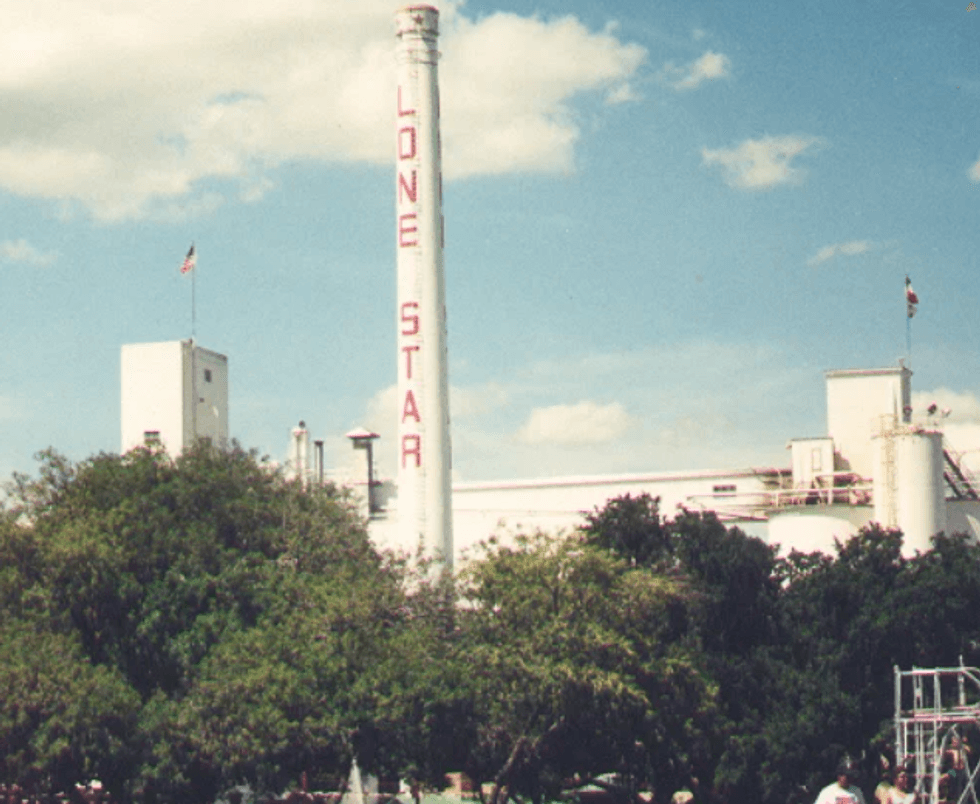
"[Lee] talked about getting to Lone Star and just being amazed by the place," Banas said. "You just look at other great breweries in the world, and yet, this was the one [Lee] said he felt was the most beautiful brewery in the world."
Though Lone Star may now be known as an affordable, everyday beer, those who were involved in the brand approached it with something closer to awe.
"Pearl Brewery was a gorgeous, gorgeous building, but [Lone Star Brewery] was like a modern temple,” said Banas. “There was beauty, and somehow in there, they brewed beer."
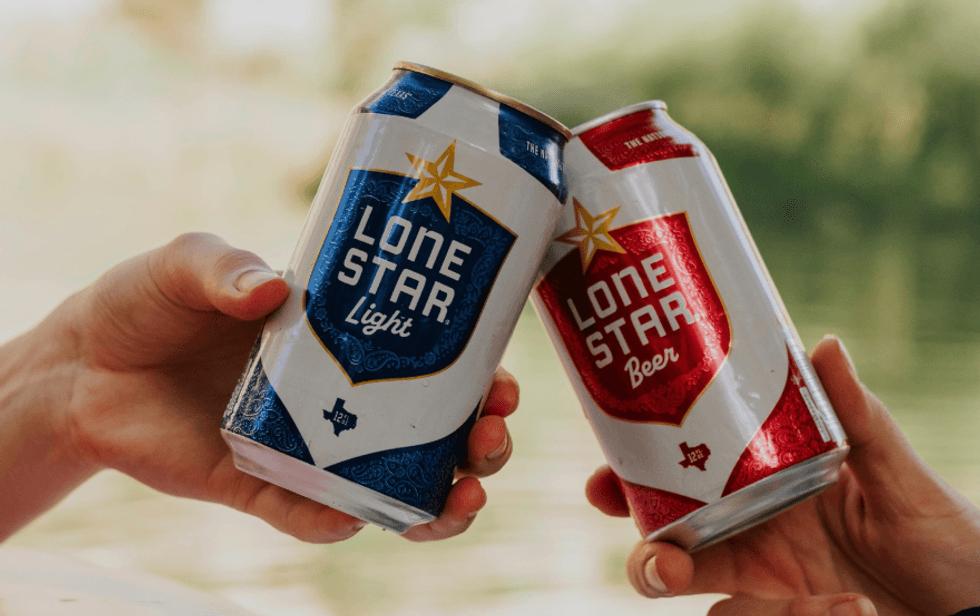
Photo courtesy of Lone Star Brewing Co.
A new book releasing in July, “Lone Star Beer: A History of Two Iconic San Antonio Breweries," attempts to clarify a complex heritage of Lone Star Beer, also known as "the National Beer of Texas."