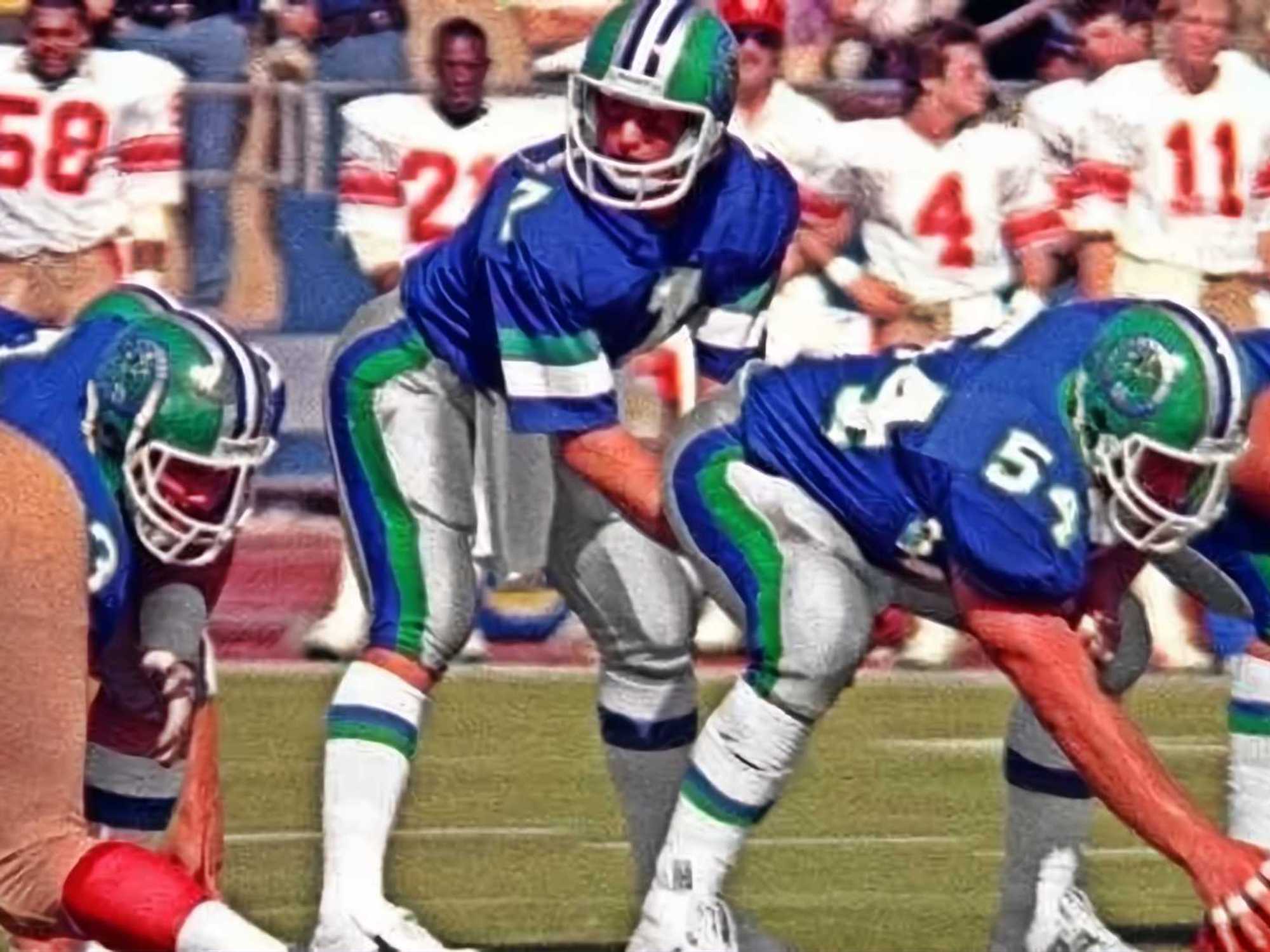
The return of the San Antonio Toros might have locals cheering from the stands, but a new book is remembering Alamo City’s gridiron glory days. Greg Singleton’s Gunnin’ for Glory: The Wild, Weird, Wonderful Stories of the USFL's San Antonio Gunslingers tells the story of one of the city’s few stabs at major league football.
Singleton was the media information director for the United States Football League team during its brief, two-season ‘80s run. Although the upstart league quickly dissolved, it had television contracts with ABC and ESPN, and produced future NFL stars and Hall of Famers, such as Steve Young, Jim Kelly, and Reggie White.
Still, the USFL faced more than its fair share of hurdles. No salary cap meant star players’ paychecks spiraled, exacerbating rising stadium rents and other expenses. And Donald Trump, then a USFL franchise owner, pressured a shift to fall play, a move which spooked owners and TV networks wary of competing with the NFL.
After a failed effort to force a merger with the bigger league, the USFL folded — never starting its planned fall 1986 season. The Gunslingers were out of ammunition.
Before joining the staff, Singleton co-owned a local public relations and advertising agency. San Antonio oil magnate Clinton Manges, at the time the owner of the San Antonio Charros/Bulls, drafted him to help market the new team. Singleton initially saw much potential in the new league.
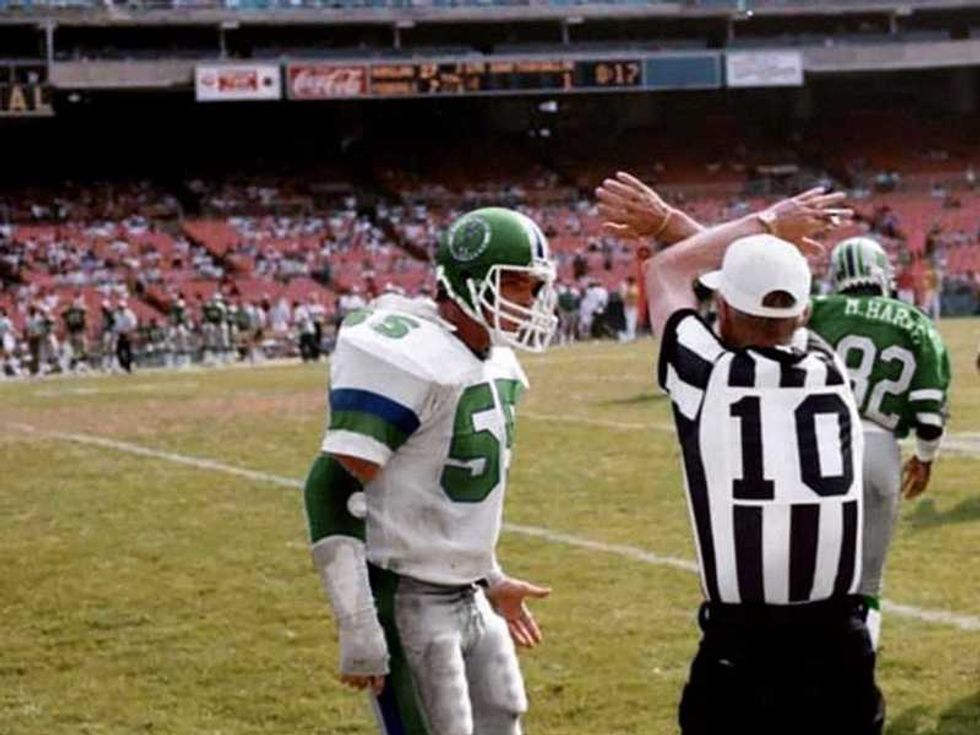 San Antonio Gunslingers' Putt Choate pleads his case with a referee. Courtesy of USFL/Reddit
“We were the first pro football league to be on ESPN,” Singleton says. “The TV market for us was pretty good. It provided a challenge to the NFL at that time.”Jay Howard, who later became the radio voice of the San Antonio Spurs, called Gunslingers games on WOAI radio. The team soon courted fans from far and wide.
“We got letters from people in Canada, Mexico, all over the United States,” Singleton recalls. “We got people from all over the place because they had heard the games on the radio.”
But the Gunslingers were hardly a dynasty. The team struggled on and off the field. The Gunslingers compiled a 12-24 total record and had an average attendance of 13,582 over two seasons. And the ‘80s oil bust decreased Manges’ net worth. Some paychecks were delayed; others bounced. Teammates raced each other to the bank to quickly cash their checks. A few players reportedly traded game tickets for food or even stayed with fans when they were unable to afford rent. Others were regularly deactivated to ensure the team could make payroll.
One night game even went dark after a disagreement with the electric company. Nonetheless, Singleton maintains that Manges was not malicious, even if running a team on available cash was a strain.
“Sometimes we would get paid, sometimes we wouldn't. It got kind of crazy that way, and people got the impression that (Manges) was trying to cheat people. He just didn't have (the cash),” Singleton says. “When a guy with his reputation tells you he's going to take care of you, you don't know whether that's good or bad.”
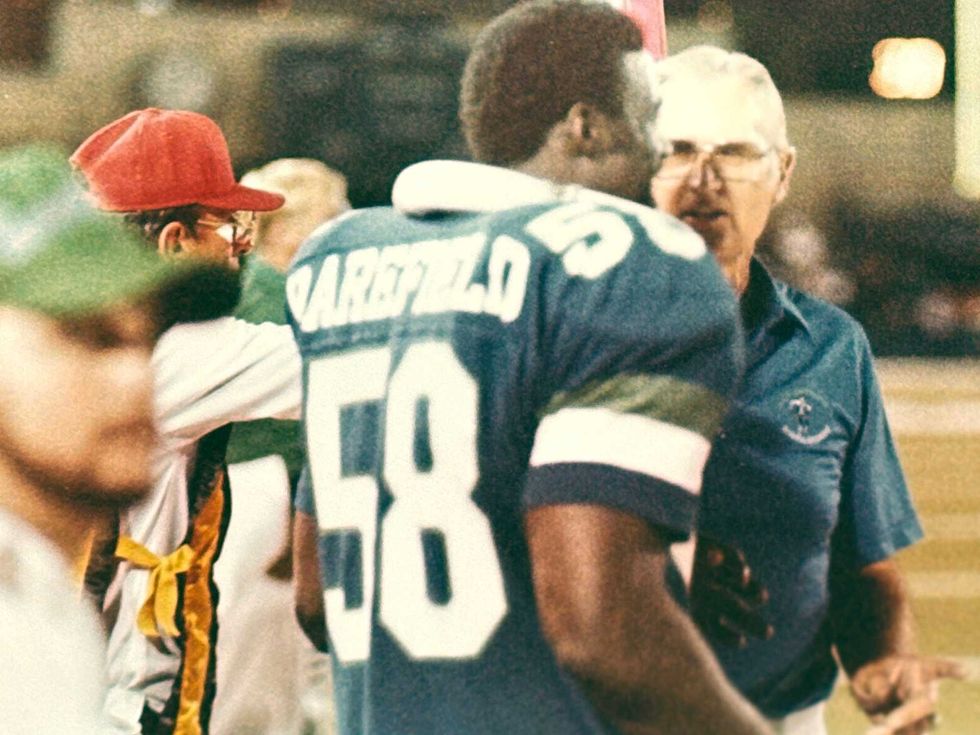 San Antonio Gunslingers linebacker John Barefield talks with coach Gil Steinke. Courtesy of Greg Singleton
Alamo Stadium itself left a lot to be desired. Players dealt with cramped locker rooms that had no air conditioning, and often hurt their knees on the thin artificial turf, which Manges reportedly did not pay to keep clean.
Finances tightened in the Gunslingers’ second and final season, 1985. Teammates threatened to sit out games if they were not paid, and head coach Jim Bates quit midway through the year.
Singleton recalls a particularly tense situation where an unnamed player bragged about forcing Manges to cough up funds by waving a gun in his office. Inspired by his teammate’s alleged audacity, Lee Spivey barged into Manges’ office and pretended to point a gun from inside one of his pockets. Manges promptly kicked him out.
“(Manges told Spivey) ‘I know what you're doing. You're not helping me.’ Spivey didn't get his money,” Singleton says of the bizarre incident.Manges finally stopped paying the team’s bills and, when the season ended, the Gunslingers became the first and only USFL franchise to be revoked.
“The Gunslingers were different from a lot of teams. We were in existence for two years, and those were the most fun and the scariest two years of my life,” Singleton says.
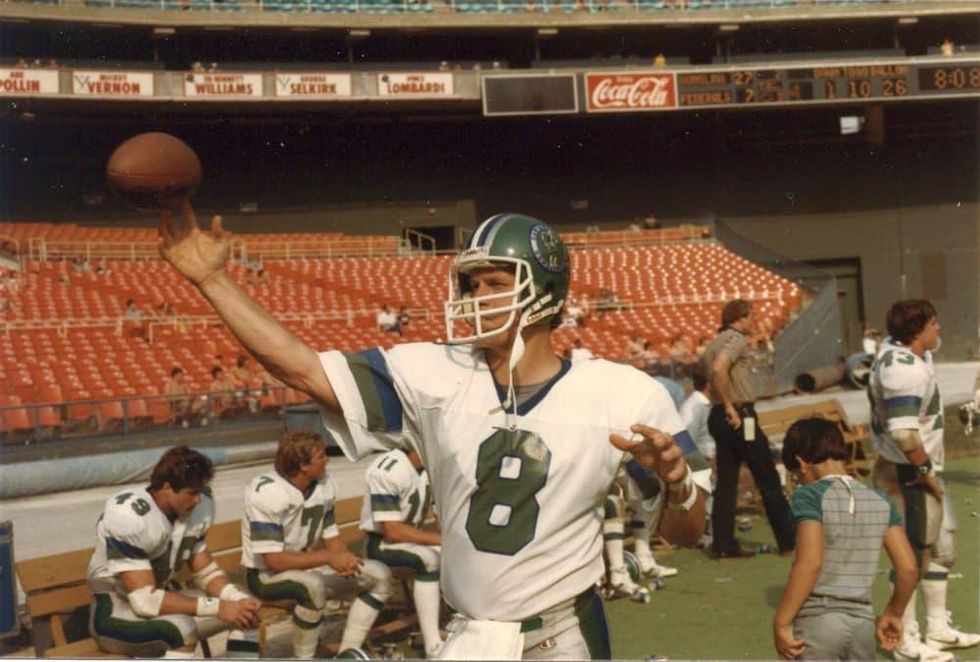 The Gunslingers franchise was so poorly run, some players saw their paychecks bounce. San Antonio Gunslingers/Facebook
After the USFL folded, the Gunslingers’ parent company was auctioned off to pay debts. Manges subsequently filed for bankruptcy. When he died in 2010, back wages still had not been paid.
Singleton has stayed in touch with many alums. When the Gunslingers reunited in 1998, attendees urged Singleton to write a book. Author Jeff Pearlman — who wrote a book about the USFL — gave him the final nudge.
“It was really just what I felt and what I thought at the time,” Singleton says about the writing process. “Since that time, I've had former players and staff members calling me all the time saying, ‘You need to do so-and-so and so-and-so. You didn't do that. You didn't add this.’”
Singleton feels the USFL Gunslingers franchise is a particularly interesting part of San Antonio’s checkered history with professional football. Eight local minor league football teams have taken the ball since the 1960s, including the unrelated Indoor Football League’s San Antonio Gunslingers, who kick off their season on the Memorial Day weekend.
According to Singleton, no one reason exists why semi-pro football has been mostly unsuccessful in San Antonio.
“There are different kinds of approaches to everything. It's not strictly looking at it and saying, ‘Here's the mark, let's move into that.’ There's a lot of other things at play.”