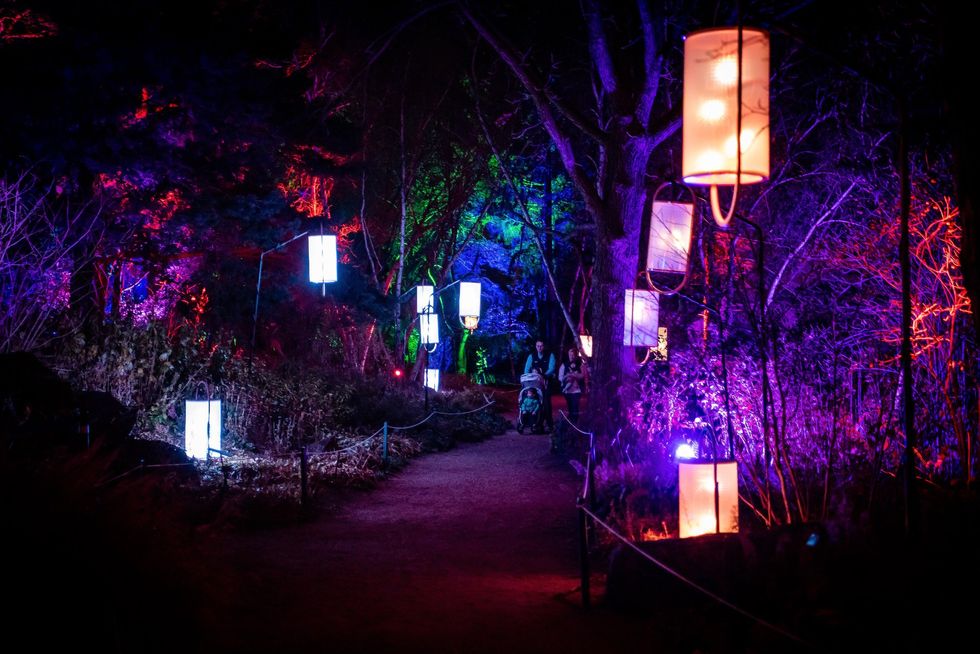
Call it the grown-up version of posing with Santa Claus. Since its dazzling debut in 2021, the San Antonio Botanical Garden’s Lightscape has been the essential stop for holiday photoshoots. Planners are already working hard to ensure the annual tradition is more brilliant — and accessible — than ever.
Tickets are now on sale for the showstopping exhibition, running November 17 to January 1. The festivities will include familiar displays and brand-new illuminated works from global designers.
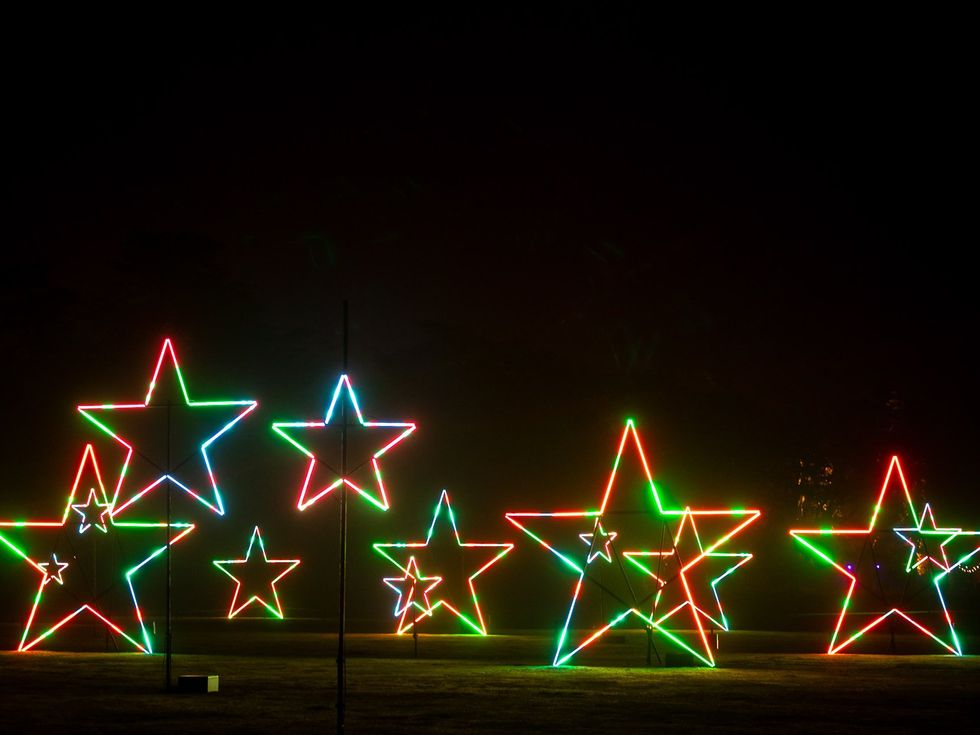
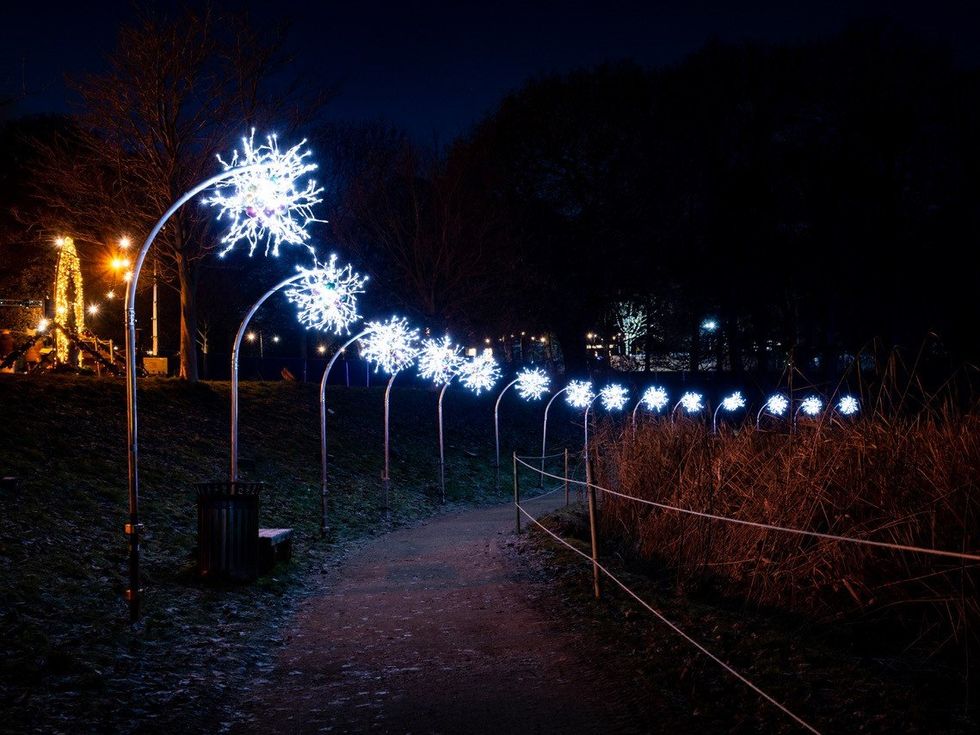
French creative studio Pitaya will return with a new installation, "Spark Ballet." The work features dozens of hanging lanterns glowing with firefly lights as a flickering guide around the lake. Visitors will also be treated to a pair of large-scale spectacles from UK outfit ArtAV, including an array of sparkling stars and a 40-foot-high LED tree.
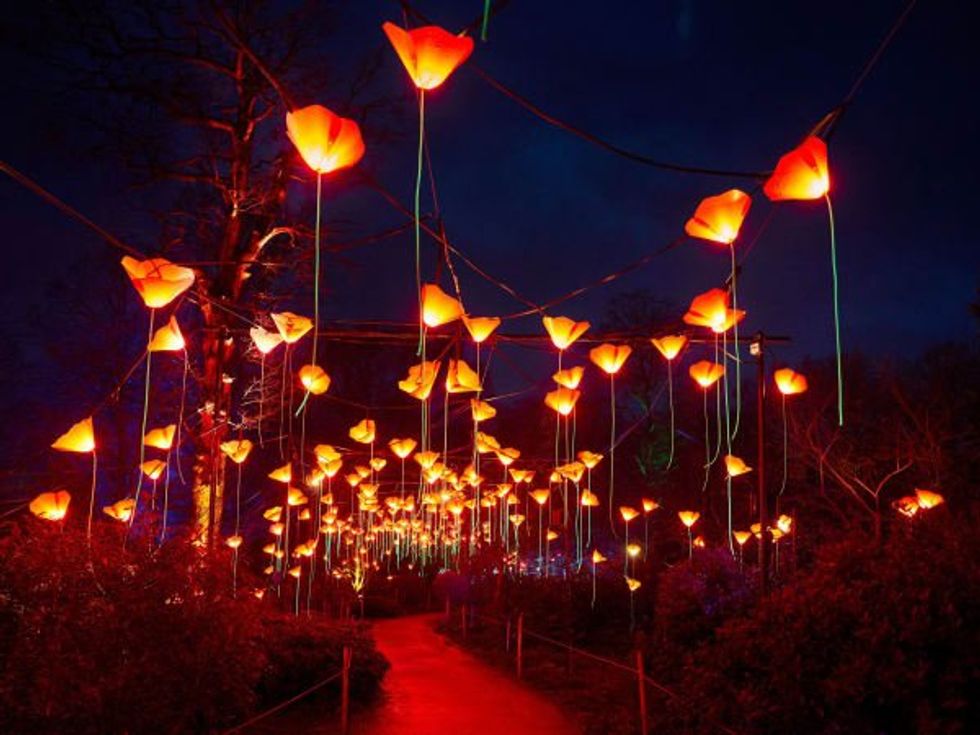
Some of last year’s favorites will make an encore. The "Heart Arch Walk" allows guests to stroll under a tunnel of love while "Floraison" canopies explorers with brightly lit poppies. As always, the "Winter Cathedral" provides one last selfie spot.
The ever-popular "Bluebonnets" will also mesmerize sightseers, this time with an army of life-sized cowboy nutcrackers. The "Fire Garden" will have a new addition, too — the 25-foot dragon last seen in the blockbuster Imaginary Worlds: Once Upon a Time exhibition.
Peak date tickets cost $28 for adults and $18 for children, with VIP packages and member discounts available. For the first time ever, the garden also offers Value Nights on select dates in November and December. Revelers can score tickets as low as $18 for adults and $10 for kids online.
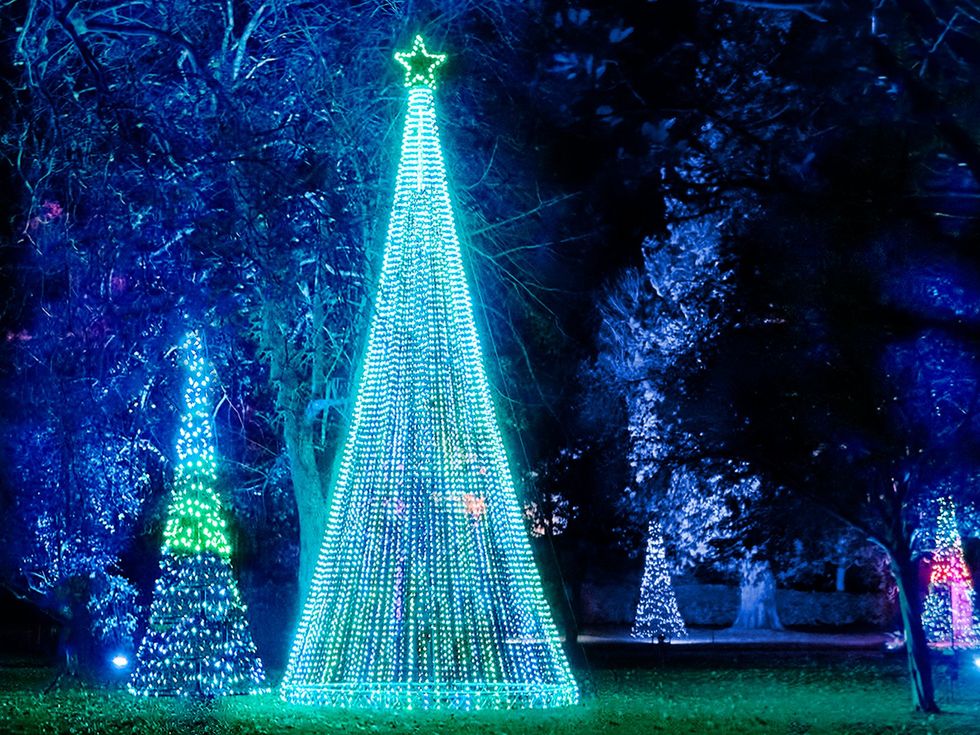
Photo courtesy of San Antonio Botanical Garden
Floriason features a field of illuminated poppies.
Few people are strong enough to resist the lure of Girl Scout cookie season every year, with the cookies’ limited availability and unique flavors a strong incentive to indulge. But only the girls and their families who have sold the cookies know the joys and stresses of trying to get people to buy them, a process that is detailed in the new documentary, Cookie Queens.
The film by documentarian Alysa Nahmias uses the stories of four different girls to represent the nationwide ritual for the Girl Scouts. They include 12-year-old Olive in Charlotte, North Carolina, a longtime top seller; 8-year-old Shannon Elizabeth in El Paso, Texas, who wants to earn the reward of going to camp; 5-year-old Ara in San Diego, California, whose goal is modest compared to most other girls; and 9-year-old Nikki in Chino, California, who has to compete with her older sisters in the cookie-selling bonanza.
The girls represent a cross-section of both ages and backgrounds, with some girls coming from wealthy families and some girls dealing with more limited means. And how much money your family has makes a big difference, as not only does someone richer have more freedom with their time and supplies, but all scouts are required to reimburse the organization for every box they take in, regardless of whether they’re able to sell it or not.
That caveat makes the journeys of the four featured girls feel wildly different. It’s clear from the start that Olive and Nikki’s families don’t give a second thought to the personal economics of selling cookies, with each girl taking in thousands of boxes at the beginning of the six-week selling season. With both Olive and Nikki rightfully confident that they’ll have no problem offloading their supply, their stories turn to how selling is personally affecting them, with each trying to reconcile the fun of doing it with the pressure they feel from their family members.
Shannon Elizabeth’s story is more harrowing, as her parents feel a strong desire to help her accomplish her lofty goal, but worry that the cost might literally be too high for the family as a whole. More than once, the parents are shown fretting that they won’t have the money to pay back what they owe should they fall significantly short in their sales. Their selling approach, which includes walking through an empty swap meet and standing outside a chain restaurant at night, only adds to their stress.
The most fun story to watch is that of Ara, whose innocence is matched by her confidence. Her parents teach her how much money they’ll owe with her small goal of 55 boxes, but right away she takes on more responsibility than expected. She’s shown making sales pitches and tallying the total number of boxes she’s sold with little-to-no help from either her mom or dad. With her high voice, glasses, and a monitor on her arm to manage her diabetes, she becomes the cute and sympathetic part of the film.
There are times that the film starts to feel more than a little manipulative, however. While many of the moments documented come off as organic, some of them seem like Nahmias is actively guiding the participants in order to get a better story. This is especially evident with Shannon Elizabeth and her family, whose early struggles turn into a miraculous feel-good story by the end, a turnaround that seems implausible at best. Everything with them might have been aboveboard, but Nahmias and her team edit the family’s journey in a way that pushes a bit too hard for emotion.
Cookie Queens, which was produced by a company owned by Prince Harry and Meghan Markle, helps to give insight into the business of selling Girl Scout cookies for those who’ve only been on the purchasing end of the transaction. The dedication of each girl toward selling their allotted supply proves fun and interesting, even if the filmmaker tries to gild the lily on occasion.