Texans already knew that Schlitterbahn is one of the state's best waterparks, and the company's flagship waterpark in New Braunfels is on a bit of a hot streak.
For the 24th year in a row, Amusement Today has named Schlitterbahn New Braunfels the world’s best waterpark as part of the publication’s Golden Ticket Awards program.
“For our park to have won this award again for the 24th consecutive time is humbling,” says Darren Hill, vice president and general manager of Schlitterbahn Waterparks & Resort. “This Golden Ticket represents the greatest reward for the hard work and efforts of our associates who each day strive to provide a safe, friendly, unique, and fun environment for our guests.”
Presented each year, the Golden Ticket Awards recognize excellence in the amusement park industry. Winners are determined based on polling done by Amusement Today, an Arlington-based publication that covers news about amusement and water parks.
Sandusky, Ohio-based Cedar Fair Entertainment owns and operates Schlitterbahn New Braunfels, which opened in 1979. Sitting on the banks of the spring-fed Comal River, the park features 51 attractions on over 70 acres. The attractions include various river rides and waterslides.
“We’re all about making people happy, and it’s always a tremendous honor and a privilege when our commitment to serving our guests is recognized and celebrated,” says Richard Zimmerman, president and CEO of Cedar Fair.
The reason that most biopics fail is because they try to do too much, telling a “cradle-to-grave” story or one taking place over a long period of time that only scratches the surface of understanding the full measure of a particular person. A better approach is the one taken in the new film Tony, which uses a formative period of time in the life of Anthony Bourdain to identify a larger truth about him.
The film finds Tony (Dominic Sessa), as he liked to be known at the time, in his early college years, trying to BS his way through life. He tells lies to professors, his parents (Dagmara Dominczyk and Rich Sommer), his old classmate Nancy (Emilia Jones), and even himself in an attempt to skate by without actually doing anything.
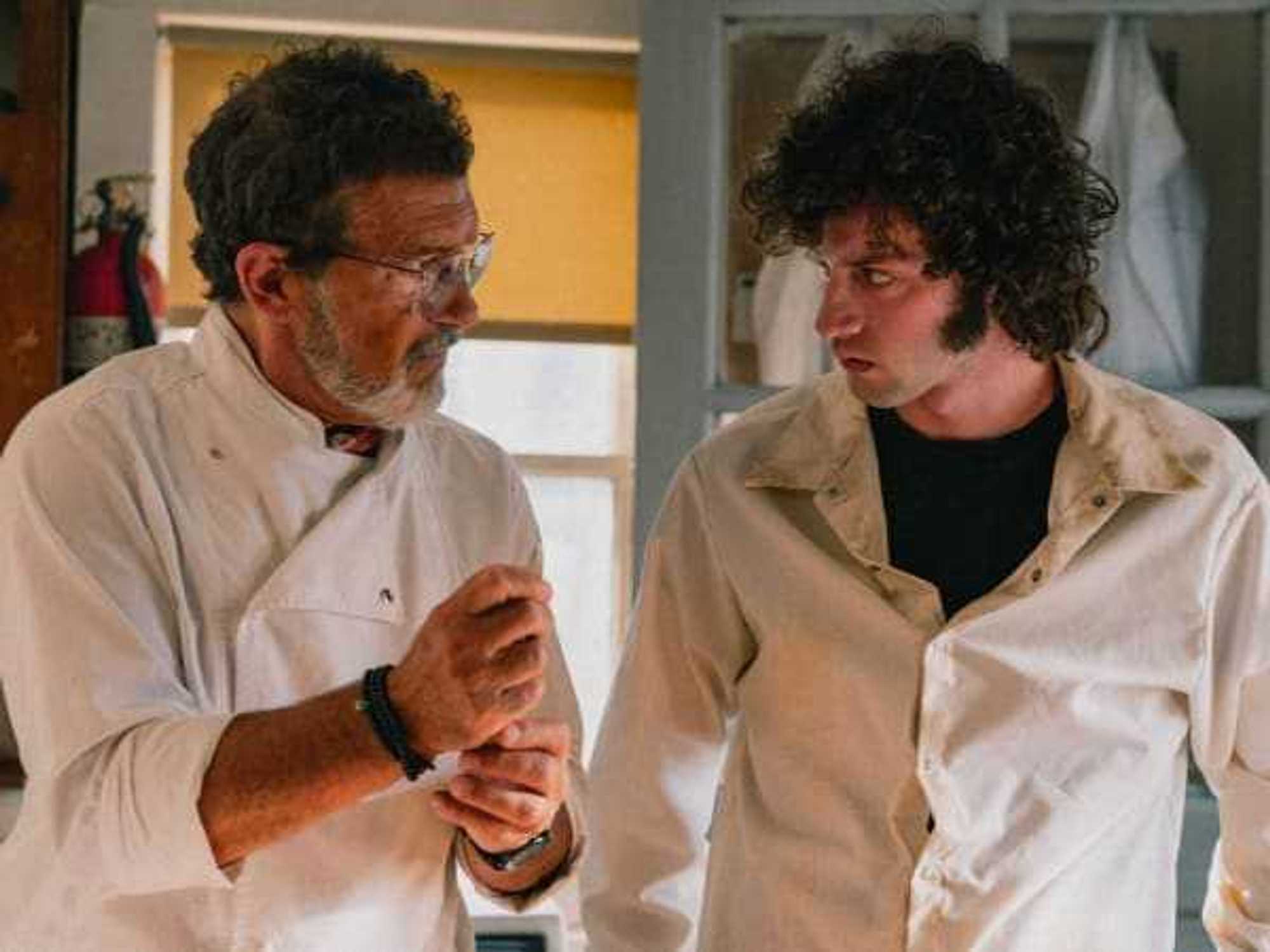
When one con falls through, he follows Nancy to Provincetown, Massachusetts, to try to find her. A series of events result in him getting drunk in a restaurant owned by a chef (Antonio Banderas), who takes him in. Tony starts working as a dishwasher and hanging out with Sal (Leo Woodall), who barely has his own act together. With no other options, he spends his summer on Cape Cod, hoping something will happen to change his lot in life.
Written and directed by Matt Johnson (Blackberry) and co-written by three others, the film gives barely a hint of the man who would go on to become a celebrity chef and acclaimed author. It does indicate that his brashness was always there, but this Tony is aimless and too often rash in his decision-making. His biggest success in the film only comes when he finally recognizes that lying has brought him nothing but misery, and that telling the truth, even if it’s painful, sets him free.
The restaurant at which Tony works, the now-defunct The Flagship, is the heartbeat of the film, containing a motley crew of people who bond over slinging mostly mediocre seafood. Johnson evolves Tony’s relationship with the chef (who’s never given a proper name) into a strong one as Tony spends each night in a hammock on the chef’s porch, only to be woken up each morning with a pot of water thrown in his face.
Tony continues to pursue Nancy for most of the film, and even though their relationship is not fruitful in terms of storytelling, it serves to enforce the mindset of the young man. Nancy only exists as an object of desire for Tony, with just the barest touch of an interior life of her own. While the intent of including a romantic interest for Tony makes sense in a way, it ultimately is the weakest part of the film.
Sessa, who made a bold film debut in 2023’s The Holdovers, has turned into one of the industry’s bright young stars. He embodies the moodiness of Bourdain, stalking around the town with a scowl and lanky walk that tells the audience everything they need to know about the character. Banderas and Woodall (Tuner) bring different types of great energy, and while Jones’ part is not great, she proves that - following CODA - she’s going to be around for a long time, as well.
Fans of Bourdain may lament that Tony doesn’t show anything from the years in which he became famous, but the small and personal film makes a great case that the period it depicts is equally significant to his life. It demonstrates that Tony’s summer on Cape Cod gave him some direction, a reason for being that allowed him to become who he eventually became.