Interpol will soon turn on the bright lights in San Antonio. The indie fave — a leader of the 2000s’ post-punk revival — will bring its comeback tour to St. Paul Square venue The Espee (1174 E Commerce St.) on March 18, 2027.
The engagement is one of only three Texas stops. The band will also be playing Payne Arena in Hidalgo on March 19 and the Bomb Factory in Dallas on March 20. Interpol will be supported by blackgaze pioneers Deafheaven throughout the tour’s Lone Star leg.
Formed in Manhattan in 1997, Interpol became a critical darling after its debut album, Turn On the Bright Lights, in 2002. The band has gone on to release seven more albums throughout its career, staying true to its signature sound that layers frontman Paul Banks’ brooding baritone over chiming guitars.
The band’s latest, This Mirror Weighs a Ton, adds a bit of trip-hop glimmer to the production, but otherwise is a return to form. Much of the lightness is owed to producer Andrew Wyatt, known for pop collaborations with Rosalía, Charli XCX, and Miley Cyrus, and an Oscar-winning songwriting credit with Lady Gaga.
Critics are calling it the best Interpol album since 2004’s Antics, saying it breaks up a long string of repetitive records that only hinted at the group’s glory days. The Guardian went so far as to call it a “masterpiece.”
Artist presale tickets, available through Interpol’s website, become available at 10 am Central on Wednesday, October 28. Local presales launch at 10 am on Thursday, October 29, with general sales following on October 30.
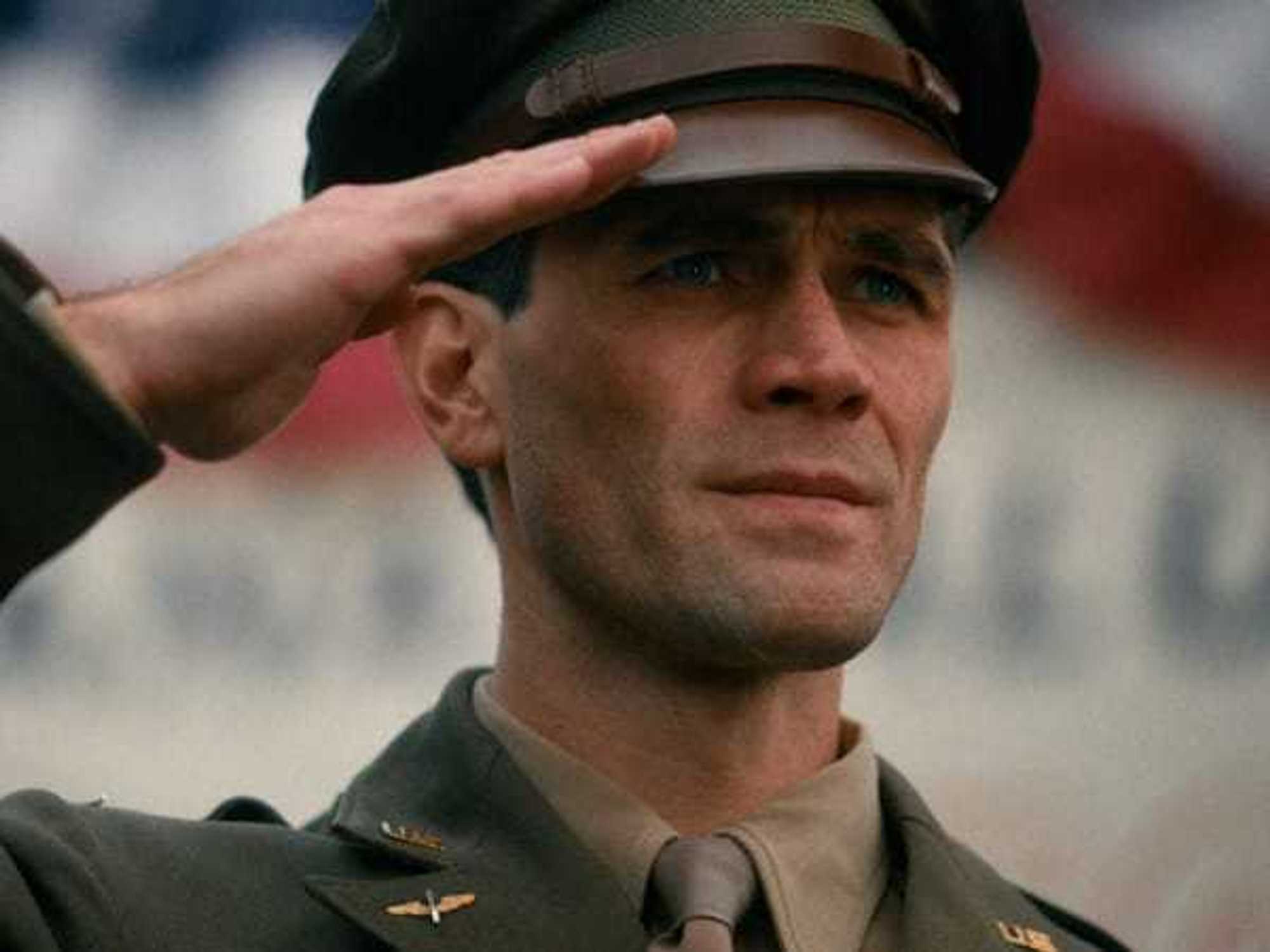
Actor Jimmy Stewart, thanks to movies such as Mr. Smith Goes to Washington, The Shop Around the Corner, and The Philadelphia Story, had the reputation early in his career as the everyman in Hollywood, someone to whom most audiences could relate. That became even more true when Stewart entered the military during World War II, a period that is explored in the new biopic, Jimmy.
Stewart (KJ Apa) was riding high in 1941, coming off his first (and only) Oscar win for The Philadelphia Story. As depicted in the film, his life is upended when he receives a military draft notice as the U.S. prepares for war. He’s determined to serve, but people like studio head Louis B. Mayer (Jason Alexander) try to talk him out of it. Already an experienced pilot, he eventually joins the war in Europe, flying the B-24 bomber.
Despite his celebrity status, Stewart requests to be treated the same as any other soldier, which means flying multiple missions over enemy territory. He moves up the ranks, becoming a leader tasked with, among other things, reporting the deaths of service members to their families. He also starts a friendship that develops into a romance with Lady Julia (Kara Killmer), giving him a distraction from the horrors of war.
Directed by Aaron Burns and written by Justin Strawhand, the film has the clear goal of being a hagiography for Stewart, showing all of his good qualities and few of his bad ones. In fact, the character of Stewart is harder on himself than the actual movie is, chastising himself over the deaths of fellow soldiers that he likely could not have prevented. The filmmakers go to great lengths to show how good and well-respected Stewart was, something that may well be true, but doesn’t make for great drama.
The bulk of the film features Stewart at war, following him and others as they fly multiple missions and commiserate over the price of combat. The sequences are fine, but the film’s budget does not appear to be high, and so the CGI needed to recreate the scenes is noticeably subpar. Because Burns and Strawhand usually keep to surface-level storytelling and don’t go deep on any character besides Stewart, his time at war is engaging but slight.
The film is bookended by Stewart and Frank Capra (Max Casella) making It’s a Wonderful Life, Stewart’s first film after coming back from war. It’s here that the movie becomes most interesting as Stewart, still affected by his war experience, struggles to bring the character of George Bailey to life. The behind-the-scenes look at the film-within-the-film and the recreations of its iconic scenes are catnip for anyone who knows/loves the Christmas classic.
Apa, best known for starring as Archie on the TV show Riverdale, does extremely well as Stewart. He nails Stewart’s quavering voice and the way he ambles about plays right into the actor’s established persona. Casella and Killmer get the most play in supporting roles, and each does solid work as characters trying to understand Stewart. Alexander, Sarah Drew as Hedda Hopper, and Rob Riggle as a colonel each go a little too big in their respective parts.
Jimmy is probably best watched as an approximation of the man Stewart was in the 1940s, not as something that’s completely true to life. The film elides or stretches the truth on multiple occasions, which is par for the course in biopics. It could have used some stronger storytelling to make Stewart feel like a real person, not merely a replica of the famous actor.