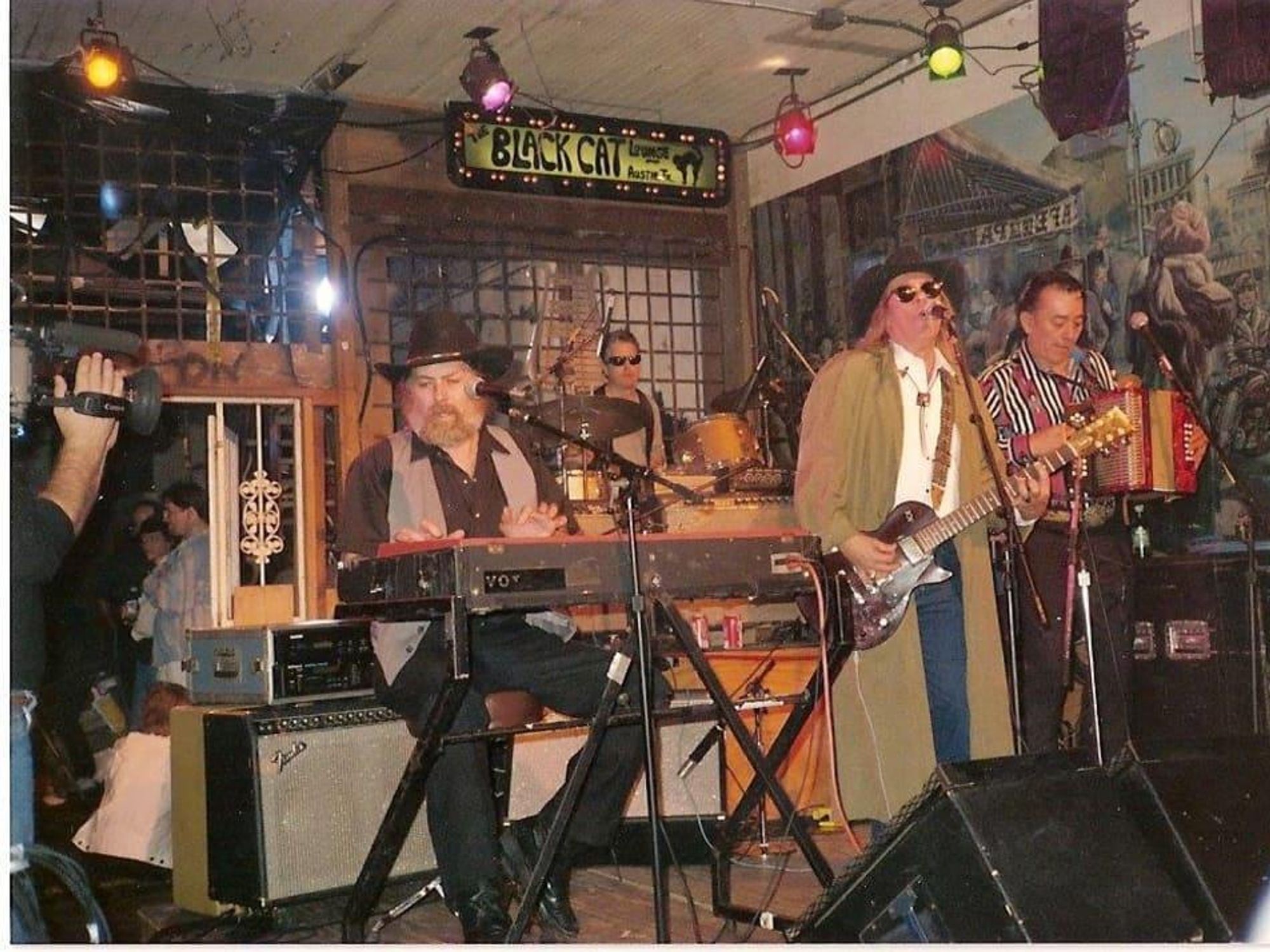
Two professors at the University of Texas San Antonio are harmonizing on a project designed to preserve a genre of music born in Alamo City.
Sylvia Mendoza and Gloria Vásquez Gonzáles, both from UTSA’s Department of Race, Ethnicity, Gender, and Sexuality Studies, have received $5,000 from the school’s Westside Community Partnerships Initiative to document what’s known as the West Side Sound. UTSA describes the West Side Sound, which is said to have originated here in the 1950s, as a fusion of jazz, R&B, and Tejano music.
The West Side Sound Oral History Project will feature elements such as interviews, photos, and recordings.
Mendoza, whose father was a musician, grew up listening to her mother describe the West Side Sound.
“They didn’t know it as the West Side Sound then, as they were living it,” Mendoza says in a UTSA news release. “She just knew it was the dudes from the neighborhood, musicians from the area who were getting together and playing Motown songs.”
The Keyhole Club was one of the West Side venues where visitors could regularly hear this special sound.
Mendoza and Gonzáles have teamed up with Jaime Macias and Norberto “Geremy” Landin to carry out the project. Macias owns Jaime’s Place, a West Side bar and community gathering place, while Landin is director of equity and social advocacy for Bexar County Commissioner Rebeca Clay-Flores and a member of the Bexar County Historical Commission.
Writer/director Paul Greengrass made his name with a cinéma vérité style of filmmaking that brought immediacy and depth to three Jason Bourne films, United 93, Captain Phillips, and more. In The Uprising, he uses those skills to tell the story of the so-called Peasants’ Revolt in 14th century England.
Greengrass wastes no time starting the main plot as Ploughman (Andrew Garfield) and his fellow villagers object to onerous taxes put on them by the country’s nobility, led by the young King Richard II (Woody Norman), to fund an ongoing war. Ploughman initiates a violent response over the tone-deaf — and unseemly — way the king’s guard go about their business, and the rebellion soon starts to spread across the countryside, with the citizens looking for a degree of autonomy.
The ever-expanding group makes their way toward London to try to make their case to the king himself. Meanwhile, the king’s top advisors, including Archbishop Sudbury (Stephen Dillane) and Treasurer Hales (Tom Hollander), try to usurp power from the inexperienced monarch even as the king’s mother (Katherine Waterston) tries to get him to be more assertive.
The history of the English monarchy is long and lurid, as Shakespeare detailed in multiple plays, including Richard II. Though the events in the film took place almost 650 years ago, it’s easy to see parallels between what the peasants were fighting for and modern-day politics. Greengrass’ storytelling intent is solid, and the righteous anger the citizens feel is initially relatable and palpable.
But the populism theme of the story soon gets bogged down in drudgery and minutiae that is difficult to understand, especially when the details are lost in the thick regional English accents. The leaders of the rebels — including John Ball (Jamie Bell), Wat Tyler (Cosmo Jarvis), and Alyce (Thomasin McKenzie) — are shown doing a lot of planning, but the strong feelings they have about their quest don’t come across well, leaving the audience as passive observers.
When there is action, Greengrass and his team employ a frenetic style that is not great for comprehension. While the gist of what is happening and what side is winning is legible, individual moments go by so quickly so as to be nearly meaningless. Save for Ploughman, any connection that has been made with various characters proves futile, as Greengrass doesn’t seem to have any time for emotion. Scenes that should feel thrilling or heartbreaking instead come off as empty.
Garfield is a two-time Oscar nominee who has done great work across multiple genres. He’s fine in this role, but whether it’s the story, the filmmaking, or something else, he’s not as captivating as usual. The same goes for other strong actors like Bell, McKenzie, Dillane, Hollander, and Waterston, who each seem to be giving their all to their performances but are somehow muted in the process.
Done right, The Uprising could have been a rip-roaring account of people standing up against their oppressors. What Greengrass has made, though, is a film that can’t translate its medieval story for a modern audience and concentrates too much on unexciting elements and too little on thrilling ones.